Every casino game tells a story with numbers, and most players never bother to read past the first chapter. They spin the reels, fold a bad hand, or double down on a gut feeling, convinced that luck is the only variable worth tracking. It isn't. The gap between a player who lasts a weekend and one who lasts a decade isn't luck or discipline alone. It's understanding what the house edge actually means, how variance works, and why some games let you breathe while others bleed you dry. Let's dig into the machinery.
The House Edge Isn't a Conspiracy - It's Arithmetic
Take European roulette. A single zero on a 37-number wheel means the true odds of hitting any number are 1 in 37, but the payout is 35 to 1. That two-unit gap is the house edge, roughly 2.7%. It doesn't change based on your strategy, your mood, or how long you stare at the felt. The same math applies across the floor.
Now compare that to American roulette, which adds a double zero. The edge nearly doubles to 5.26%. Same game, same rules, worse deal for the player. This is the first lesson in iGaming: the specific variant matters more than the game category. A bad blackjack table with 6:5 payouts on naturals is a worse bet than a good baccarat table with a banker bet at 1.06% edge. Players who lump all casino games together are already losing ground.
Here's a quick reference for common games and their typical house edges:
- Blackjack (basic strategy, 3:2 payouts): 0.5% or lower
- Baccarat (banker bet): 1.06%
- European roulette: 2.7%
- American roulette: 5.26%
- Slots (online, typical range): 2% to 10%
- Keno: 25% to 35%
That keno number should sting. It's not a game, it's a tax with flashing lights. Many readers start with slot deposit dana when comparing options.
Slots: The Most Misunderstood Game on the Floor
Slot players get mocked by table game purists, but the reality is more nuanced. A well-chosen online slot with a 96% RTP is mathematically better than a bad blackjack table paying 6:5. The problem is that most players don't check RTP before spinning. They pick a game because the theme looks fun, the animations are slick, or a streamer hit a big win on it last week.
RTP (return to player) is the long-run percentage of all wagered money that comes back to players. A 96% RTP slot keeps 4% over millions of spins. That's not a guarantee for your session, but it is the contract you're signing. The other variable is volatility.
- Low volatility slots: frequent small wins, slow bankroll drain, good for long sessions
- Medium volatility: balanced, the standard for most modern releases
- High volatility: rare but massive wins, brutal dry spells, requires deep pockets
A 96% RTP high-volatility slot can eat 200 spins without a meaningful payout, then drop a 500x win. A 96% RTP low-volatility slot will trickle wins back at you constantly. Same math, completely different experience. Choosing the wrong one for your bankroll size is how players misread a fair game as a rigged one.
Poker Is the Only Game Where You Play the Opponent
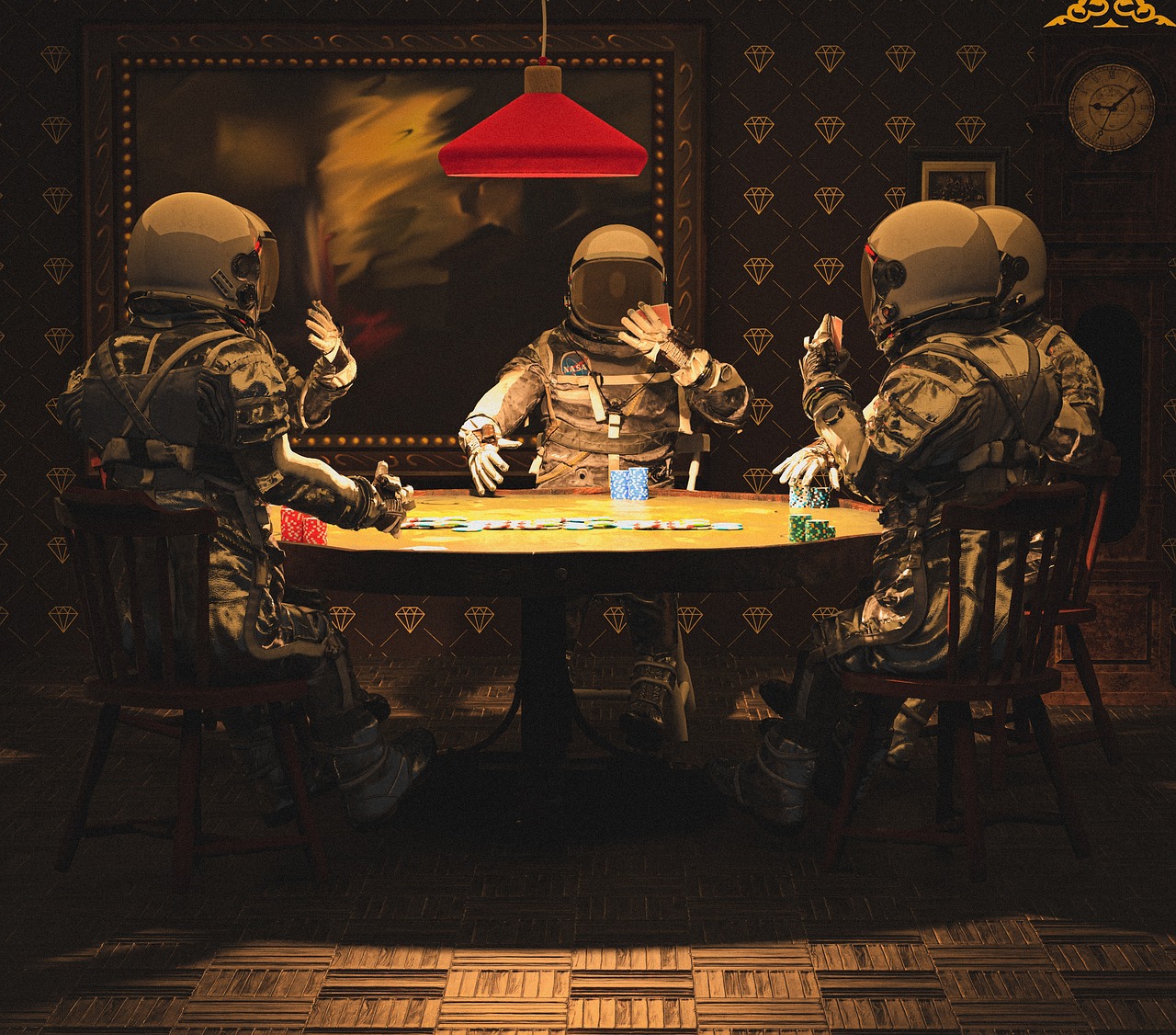
Everything above assumes the house is your adversary. Poker flips that. In a cash game or tournament, the house takes a rake, and the rest of the money moves between players. This means the edge isn't fixed. It's determined by skill differential.
This is why poker rewards study in a way slots and roulette never will. You can memorize basic blackjack strategy in an afternoon and reduce the house edge to near zero. But poker requires understanding position, pot odds, range construction, bet sizing, and player tendencies. A strong player at a weak table prints money. A weak player at a strong table is the fish everyone else is hunting.
The practical takeaway: table selection beats hand selection. Sitting in a game with drunk tourists is worth more than any GTO solver output. If you can't identify the weakest player at your table within 30 minutes, you're probably it.
Betting Markets and the Illusion of the Sure Thing
Sports betting adds another layer: the odds themselves tell you what the market believes. A -200 favorite implies roughly a 66.7% chance of winning. A +150 underdog implies 40%. The bookmaker builds in a margin, typically 4% to 8% on a standard two-way market, which is the betting equivalent of the house edge.
Where bettors get into trouble is parlay betting. Combining three -110 legs into one ticket feels like a lottery upgrade, but the margin compounds. Three legs at -110 each carry an implied probability of 52.4%, and multiplying them together gives you about 14.4% true probability for a payout that usually offers less than 6:1. The house edge on a standard three-team parlay sits around 12.5%. That's worse than American roulette.
Value betting exists. Sharp bettors find lines that are mispriced due to public money or stale odds. But it takes a bankroll, discipline, and the willingness to bet against your favorite team. Most recreational bettors don't have any of the three.
Bankroll Management Is the Only Real Strategy
You've heard it a thousand times, and it's still the single most important concept in iGaming. A player with a 95% RTP slot and proper bankroll management will last longer than one playing a 98% RTP game with reckless stakes.
- Set a session limit before you log in. Not a loss limit, a hard stop regardless of outcome.
- Size bets to your bankroll, not your ambition. A common benchmark is 1% to 2% per bet for slots, or 20 buy-ins for a poker session.
- Separate entertainment money from real money. If losing it changes your week, it wasn't entertainment money.
- Track results. Not to chase losses, but to see your actual RTP over time and adjust.
None of this makes you a winner against the house edge. It makes you a player who isn't surprised when the math does what math does.
What Actually Separates Winners From the Rest
Realistically, almost no one beats the house at casino games over a lifetime. The winners in iGaming are the ones who understand that the entire ecosystem is built on fixed mathematical edges, variable player behavior, and emotional decision-making. The player who treats it as entertainment with a cost, not as an income stream, walks away with their finances and their sanity intact.
The next time you open a slot, sit at a poker table, or place a bet, ask one question: do I know the edge of this game, and is it a price I'm willing to pay for the experience? If the answer is yes, play on. If it's a shrug, close the tab and find a better game. The house doesn't need your confusion. It already has your money.