Seasonal Dog Cafe Guide: Keeping Pups Cool in Summer Patios
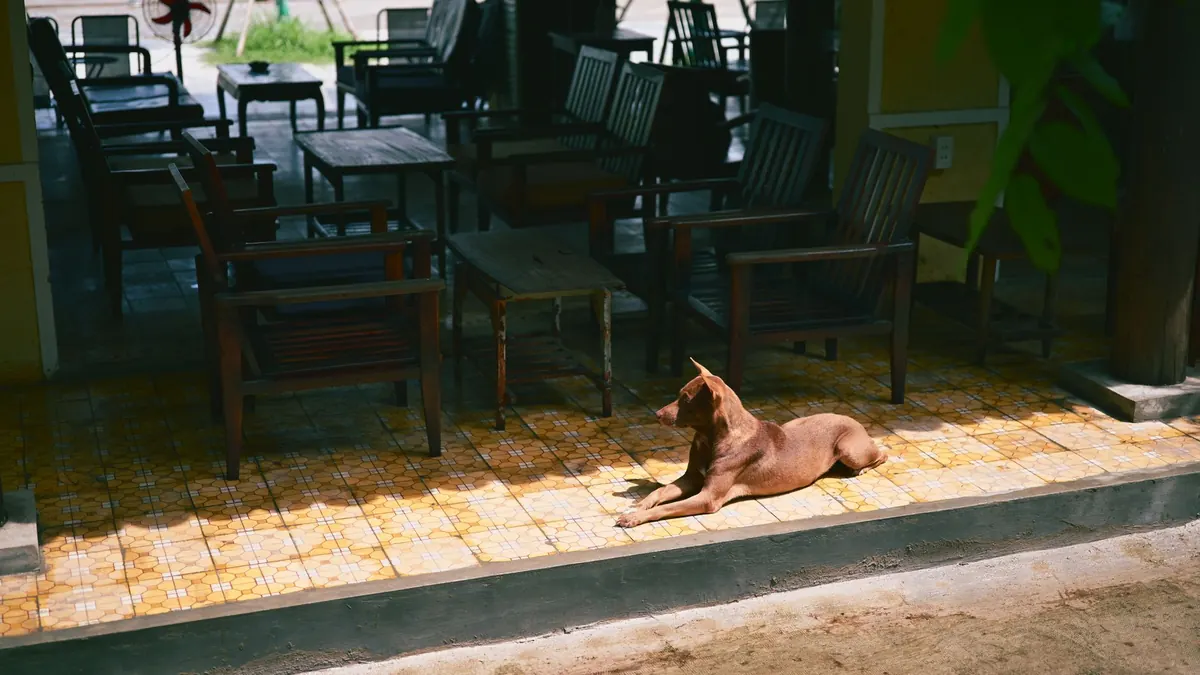
There's a version of the summer patio that lives in your head: a cold drink, a light breeze, your dog stretched out in the shade. Then there's the July version — the only free table sits in full sun, the pavement radiates heat at ankle height, and your dog is panting loudly enough to be heard three tables over.
Dogs cool mostly by panting, with a little heat loss through their paws and bellies. That makes the two things you actually control on a patio — the surface under your dog and the shade above it — more important than anything on the menu. Get those right, add steady water, and warm-weather outings become something you both look forward to.
Start With the Ground Under Your Dog
Pavement temperature and air temperature are different numbers. Asphalt that has baked in the sun all afternoon can hurt paws even when the air feels pleasant, and it keeps releasing heat long after the sun drops. A patio can be eighty degrees at nose level and still be a griddle at paw level, especially if the surface is dark, unshaded, or surrounded by brick and stone that soak up the day.
The old test still works: press the back of your hand to the surface for seven seconds. If you can't keep it there, your dog shouldn't be walking or lying on it. Rank your options roughly like this:
- Grass, soil, or mulch: the coolest choice, and a few degrees kinder than anything paved.
- Wooden decking: warm but workable in shade; check it anyway, since dark stain absorbs heat.
- Concrete and stone pavers: hold heat for hours. Shade helps, but it doesn't make them cool.
- Asphalt, metal, and dark tiles: avoid in direct sun, no exceptions.
A thin towel won't help — it just adds another layer that heats up. A raised cot, or a table at the edge of the patio next to grass, is a better bet. If you can, bring a small raised bed or an elevated mat that lets air move underneath your dog. That airflow matters more than padding. A thick, light-colored quilt folded double can buy a few minutes in shade, but it still traps heat underneath, so don't rely on it on concrete or asphalt.
Also think about the route to the table. The five minutes spent crossing a sunny parking lot or waiting on hot pavers can undo an hour of careful shade management. Park in the shade if you can, walk on grass when possible, and carry your dog across the worst stretches if they're small enough. For larger dogs, choose a cafe with a grassy approach or arrive by car and ask for a table close to the entrance.
Shade Is Not Always Shade
An umbrella's shadow moves, so check where the sun will be by the time you finish your drink. An awning, a deep porch, or a leafy tree gives you a more stable patch of shade. A shaded seat with a breeze beats a shaded corner against a wall, which can feel hotter than open air. Put the water bowl in the shade too, not at the sunny edge of the table where it turns into a warm, unappealing soup within twenty minutes.
Watch the shape of the shade as well. A table umbrella may cover your dog's body but leave their head and back in the sun. A tree may drop dappled light that looks cool but still lets through plenty of heat. The best test is simple: sit where your dog will lie down, and notice whether you feel direct sun on your skin. If you do, they will too — and they're wearing a fur coat.
Watch the Breeze and the Walls
Radiant heat is the quiet problem. A west-facing stucco wall, a brick planter, or a glass storefront can release heat long after the sun has moved on. A table against that wall may be technically shaded, but it can feel like sitting beside an open oven. Look for a spot with cross-ventilation: an open corner, a doorway with a fan, or a table under a tree where air moves freely.
If there's no breeze, create one. A small battery-powered fan clipped to a chair or crate can make a real difference, especially for flat-faced breeds like pugs, bulldogs, and Boston terriers. You can also wet a bandana or towel with cool water and drape it over your dog's chest or neck — but keep it light and let the air reach the skin. A soaking-wet towel wrapped tightly can trap heat instead of releasing it.
Water, Timing, and the Heat Index
Bring your own water. Cafe bowls are generous, but they sit in the sun, get knocked over, or run dry exactly when your dog needs them most. A collapsible bowl and a bottle of cool — not ice-cold — water should live in your bag all summer. Offer small drinks every fifteen or twenty minutes rather than letting your dog gulp a huge amount at once. If your dog enjoys ice cubes, one or two in the bowl can help, but don't force them on a dog who ignores them.
Pay attention to the heat index, not just the temperature. High humidity makes panting less effective, so an eighty-five-degree day with sticky air can be harder on your dog than a dry ninety-degree afternoon. Dogs with thick double coats, seniors, puppies, overweight dogs, and brachycephalic breeds are all at higher risk. If the forecast makes you uncomfortable in shorts and a T-shirt, it's probably too much for a long patio session.
When to Go
Early morning and after sunset are the golden hours. The pavement has had time to cool, the sun is low, and the patio is less crowded. Midday through late afternoon — roughly 11 a.m. to 4 p.m. — is when surfaces bake and shade shrinks. If you must go during that window, choose a table under a solid roof or awning, keep the visit short, and plan to leave before your dog starts looking for a way out.
The Menu Is Not the Main Event
Patio menus are full of temptation, but most people food is a bad idea for dogs in the heat. Salty fries, fatty burgers, garlic aioli, onion rings, and rich cheese can upset a dog's stomach or worse. Some ingredients — chocolate, grapes, raisins, xylitol, alcohol, and caffeine — are outright toxic. Even a "plain" piece of grilled chicken may be seasoned with onion powder or salt.
If you want to include your dog, ask the server for a bowl of plain water and bring your own dog-safe treats. Small pieces of cucumber, plain cooked chicken with no seasoning, or a frozen dog-friendly bite can be a nice reward. Skip the pup cup unless you know it's made with dog-safe ingredients and served in a small size. A giant bowl of whipped cream on a hot day is a recipe for digestive trouble.
Treat the patio like a hot car with a breeze: it can still be dangerous, and your dog can't tell you when they've had enough.
Know When to Leave
Heat stress can escalate quickly. Warning signs include heavy, frantic panting that doesn't slow down; thick drool; bright red gums; wide, panicked eyes; wobbling; vomiting; diarrhea; and collapse. If you see any of these, move your dog into air conditioning immediately, offer cool water, and wet their paws, belly, and groin with lukewarm water. Do not use ice-cold water or ice packs directly on the skin, and do not wait to see if they improve. Call your vet or an emergency clinic.
Even normal panting can be a sign that your dog is working hard. If they keep shifting positions, trying to crawl under the table, or pulling toward the door, they're not being dramatic. They're telling you the patio has stopped being fun. Leaving early is always cheaper and kinder than treating heat exhaustion.
A Simple Patio Checklist
- Check the surface with the seven-second hand test before your dog lies down.
- Choose stable shade — an awning, tree, or deep porch rather than a moving umbrella shadow.
- Bring water and a bowl, and offer small drinks often.
- Pack a raised cot or light mat so your dog isn't directly on hot pavement.
- Skip people food and bring dog-safe treats instead.
- Watch for warning signs and have an exit plan before you order.
- Go early or late, and keep midday visits short.
Make It a Routine
The best summer patio dogs aren't the ones with the most expensive gear. They're the ones whose people scout the shade, test the ground, bring water, and know when to call it a day. Pick a cafe with a grassy edge, a deep awning, or a friendly staff who don't mind a dog stretched out under the table. Arrive before the rush, settle your dog on the cool side, and order something cold for yourself.
Do that a few times and the July version of the patio starts to look more like the one in your head: a light breeze, a cold drink, and a dog who is happy to be there — because you made the two things you control work in their favor.